

I’m Jayesh Suryavanshi.
I build LLM agents & GenAI
in production at .
About Me
I build LLM agents and the systems that make them work in production.

Background
I’m a Senior Machine Learning Engineer at eBay, where I build LLM agents and GenAI systems that run in production at marketplace scale. My work spans agentic services (LLM-generated summaries, multimodal analysis across text and images, MCP tool servers) and the classic ML behind them, like gradient-boosted models trained on large-scale data. Before eBay, I worked on ML systems for the financial industry at FINRA, and built data platforms at Datava and Infosys. I hold an MS in Computer Science from the University at Buffalo (SUNY). I care about shipping AI systems that are measurable, safe, and actually used in production.
Technical Skills
- LLM & Agentic Systems: Claude (Anthropic API), Azure OpenAI, Vertex AI, MCP (Model Context Protocol), agent orchestration, RAG, prompt engineering, LLM evals
- Machine Learning & NLP: PyTorch, TensorFlow, Hugging Face Transformers, XGBoost, spaCy, NLTK
- Programming Languages: Python, Java, SQL, Scala, Go, Bash
- Data & Distributed Systems: Spark, Hadoop, Hive, Kafka, Flink, ETL, Pandas, NumPy
- Cloud & CI/CD: AWS, Docker, Kubernetes, Terraform, Jenkins, Ansible
Career
eBay Senior Machine Learning Engineer
I build production ML and LLM systems at eBay. I created and lead an internal code-knowledge platform, a CLI and MCP server that indexes microservice repositories so AI coding assistants answer with citations. It is adopted across eBay’s Payments organization, and I am a co-inventor on its provisional patent application. I also developed and deployed a transformer classifier for fraudulent buyer and seller behavior, and I build and operate an LLM service that turns long threads, images and OCR output into structured summaries and risk signals, served to internal agents as MCP tools.
FINRA Software Engineer, Machine Learning
I was on FINRA’s LLM pilot team, where I built a conversational platform on Amazon Bedrock and Polly that analysts used to inform policy decisions; it was deployed across the data science organization. I also deployed Spark MLlib models on EMR on EKS with Jenkins CI/CD to SageMaker endpoints, ran the champion/challenger tests that replaced a production model, and cut the cost of our SageMaker processing with Spot Instances.
Datava Software Engineer, Machine Learning
At Datava, a fintech startup now part of Kinective, I deployed financial decisioning models for credit unions and banks on S3, Kafka and SageMaker.
SUNY Research Foundation Research Intern
I worked with Prof. Bina Ramamurthy on distributed systems research: a DeFi protocol on the Ethereum Ropsten test network that exchanges cryptocurrency tokens automatically, without a traditional intermediary.
Infosys Software/Data Engineer
I built batch pipelines on Spark, EMR and HDFS and real-time pipelines on Spark Streaming and Druid, in Python and Scala, for vehicle telemetry from a major US automaker. The data fed data scientists and ML engineers, and I automated its delivery with Jenkins, Ansible and Airflow.
Education
University at Buffalo, SUNY Master of Science (MS), Computer Science
Savitribai Phule Pune University Bachelor of Engineering (BE), Computer Engineering
Skills
LLM agents, ML models, and the systems that run them.
I build AI systems end to end: LLM agents and multi-provider GenAI services on top of solid ML models, data pipelines, and infrastructure. The goal is always the same: systems that hold up in production, where the decisions matter.
-
I design and ship LLM-powered services end to end: agentic workflows that summarize and reason over real business data, multimodal analysis across text and images, PII redaction and content moderation, and MCP servers that let other AI agents call these capabilities as tools. I work across providers, from Claude (Anthropic), Azure OpenAI, and Vertex AI, calling multiple models in real time with structured, machine-readable outputs.
-
I build predictive models that drive real product decisions, including multi-stage gradient-boosted cascades that refine their predictions as new signals arrive. Trained on distributed data at scale, and treated as products: feature pipelines, monitoring, and evaluation matter as much as the model itself.
-
Models are only as good as the data behind them. I design and maintain pipelines on Spark, Hadoop, Hive, and Kafka that turn massive, messy datasets into reliable features and signals (batch and real-time) so both ML models and LLM systems have clean inputs.
-
I run AI workloads on cloud infrastructure using AWS, Docker, Kubernetes, and Terraform, deploying and scaling services with an emphasis on reliability, observability, and cost. Infrastructure as code by default.
-
I automate the path to production with Jenkins, Airflow, and Git-based workflows, including CI validation and security scanning for agent configurations, and tooling that generates LLM-readable documentation for codebases. Shipping AI safely should be repeatable, not heroic.
Open Source
Code I have shipped into libraries other people depend on.
Four pull requests merged into maintained scientific Python libraries, each reviewed and accepted by the people who run them. One of them shipped as a named estimator in a release, alongside two packages of my own on PyPI.
-
A multi-length discord detector for time series, contributed as a new estimator to aeon (opens in a new tab) and merged in September 2026. It shipped in the v1.6.0 release (opens in a new tab), whose notes read “New estimators, including the ExtendedIsolationForest and MADRID anomaly detectors”. I am listed in the project’s contributors file. PR #3702 (opens in a new tab)
-
Test coverage across the torch-free core detectors of PyOD (opens in a new tab), the most widely used anomaly detection library in Python: 23 of them are proven to survive a save and load round trip, and 21 a clone round trip. Merged by the library’s creator in August 2026, closing a long-standing issue. PR #708 (opens in a new tab)
-
GrayEncoder.inverse_transformdid not recover the original values it had encoded, so a documented round trip silently returned the wrong answer. Fixed with a regression test and merged by the lead maintainer of scikit-learn-contrib/category_encoders (opens in a new tab). PR #499 (opens in a new tab) -
Added a
centeroption to the lPCA intrinsic-dimension estimator, so it can run on uncentered data where the origin carries meaning rather than forcing a recentering that changes the estimate. PR #41 (opens in a new tab) -
graphspot (opens in a new tab) is inductive graph anomaly detection with honest flat baselines and a core that does not require torch, which the comparable libraries do without declaring it. It ships flat baselines beside the graph models on purpose, because a detector on raw features is a genuinely hard baseline: on Reddit, the BOND benchmark has LOF outscoring every deep graph model. GeoSocialX (opens in a new tab) maps the geography of geotagged social data and reports its coverage before it maps anything, because most posts carry no location at all. Both install from PyPI.
-
Twelve further pull requests are open with maintainers, across scikit-learn (opens in a new tab), PyOD, river, imbalanced-learn, hiclass, pythresh, DeepOD and aeon. Four add new detectors, the other eight are correctness fixes. Open is not merged, so I count them separately.
Talks
Work I have presented in public.
A talk at the IEEE Computer Society’s 2025 Enterprise Generative AI Summit on keeping enterprise language models from stating things their sources do not support.
-
Knowledge-Augmented, Self-Verifying Large Language Models for Enterprise-Scale Generative AI. A talk in the Models and Research track of the 2025 IEEE Computer Society Enterprise Generative AI Summit, presented in August 2025 with Akshay Mittal and Vivek Venkatesan. It joins retrieval, generation and span-level fact checking into one closed loop, so a claim the sources do not support is regenerated or withheld instead of reaching the user. Summit program (opens in a new tab)
Projects
Selected projects.
ftquant
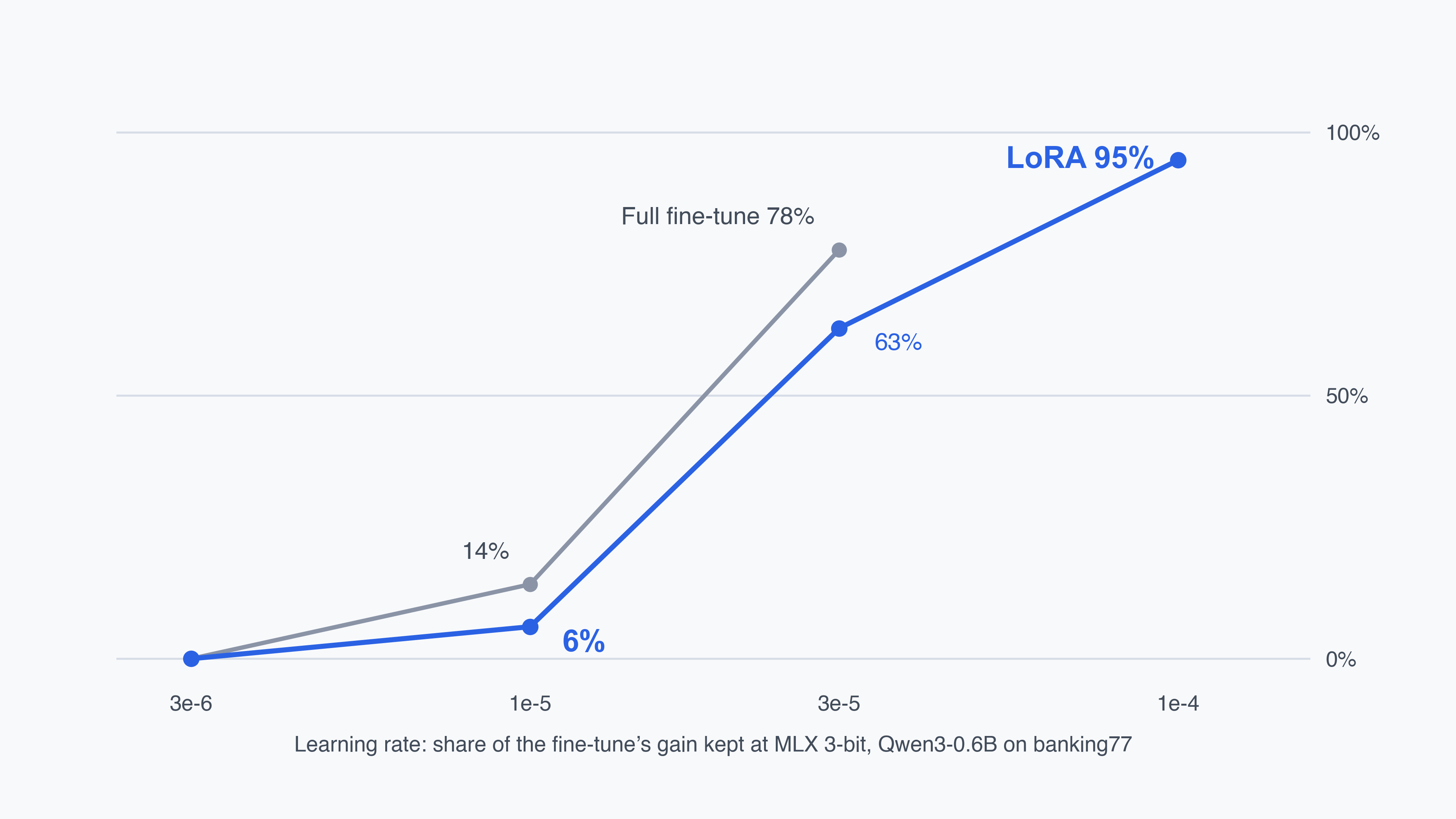
A pre-registered study of whether a fine-tune’s gain survives quantization to MLX and GGUF, and a tool that measures the risk from the weights before you quantize. The fine-tunes that lost the most were the gentle ones: at MLX 3-bit, a Qwen3-0.6B LoRA trained at 1e-5, mlx-lm’s default learning rate, kept 6% of its accuracy gain on banking77, while the same LoRA at 1e-4 kept 95%. Before quantization, the gentle one was the more accurate model. The chart is that learning-rate sweep, with full fine-tuning beside it.
The story I ran it as five pre-registered rounds on one laptop, writing down each round’s hypotheses and pass criteria before seeing its results and reporting every criterion, met or not. The direction held on a second model family (OLMo-2 1B), a second task (MASSIVE slot annotation), second seeds and Qwen3-4B: in all 10 pre-registered tests at MLX 3-bit and GGUF Q3_K_M, the LoRA at 1e-4 kept more of its gain than the one at 1e-5. A script recomputes every result quoted in the write-up from the committed predictions, run logs and result files, and checks it against the text. More in Small updates break first.
graphspot
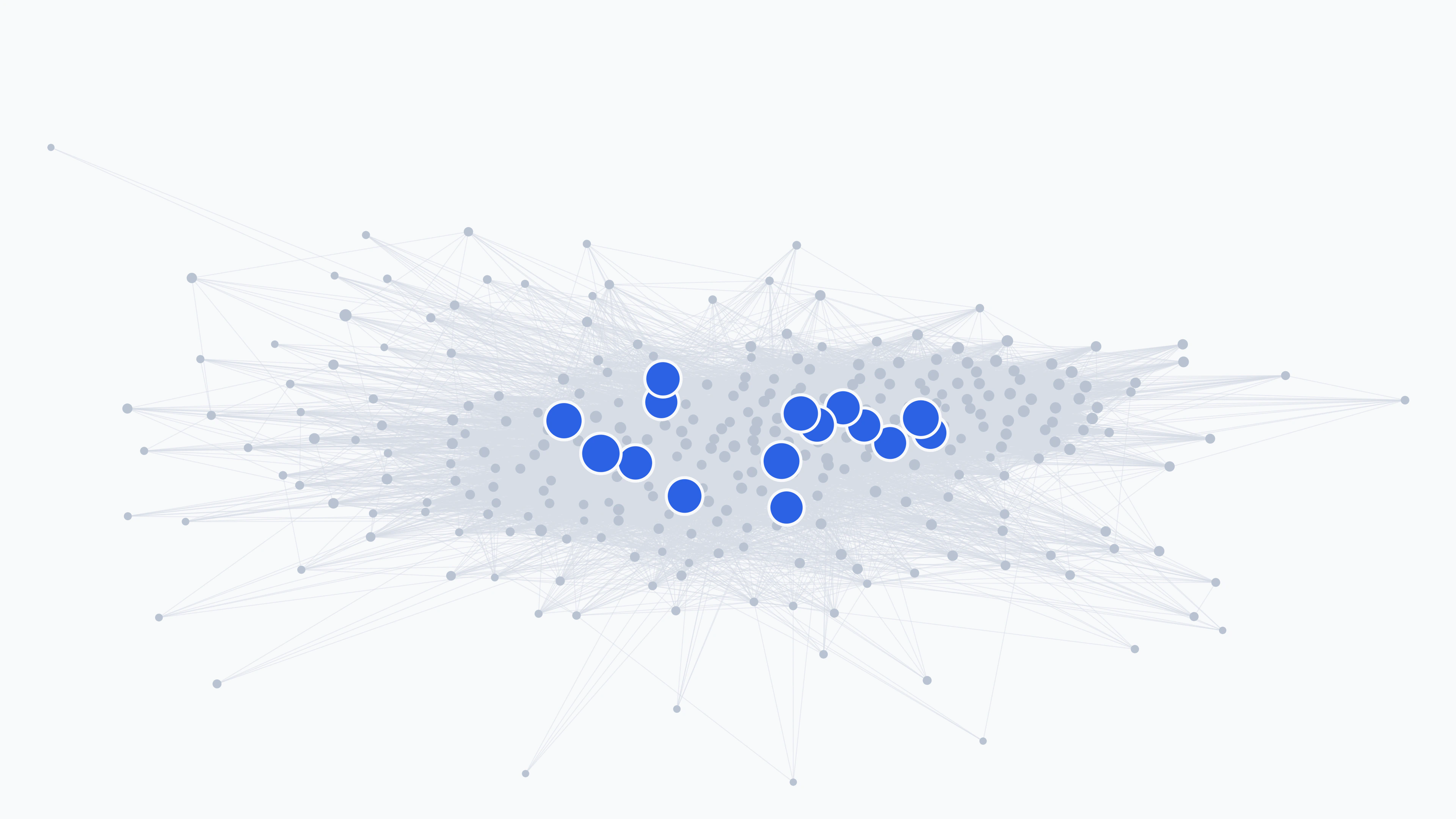
Inductive graph anomaly detection (on PyPI as graphspot), with a core that installs and runs without torch. It ships flat baselines next to the graph models on purpose, because a detector on raw features is a genuinely hard baseline to beat. The thumbnail is real output: OddBall, unsupervised, scoring a neighborhood of the Tolokers graph. I also mirror four graph anomaly benchmarks (Tolokers, Questions, Weibo and Reddit) as Parquet datasets on Hugging Face (opens in a new tab).
The story My build plan had a stop rule: if week one could not reproduce GADBench’s published YelpChi and Amazon results, I would stop and reassess. The first commit is where that test passed. Every benchmark number in the README now regenerates from one command, and a monthly CI job reruns them from scratch.
SUB-Forecast
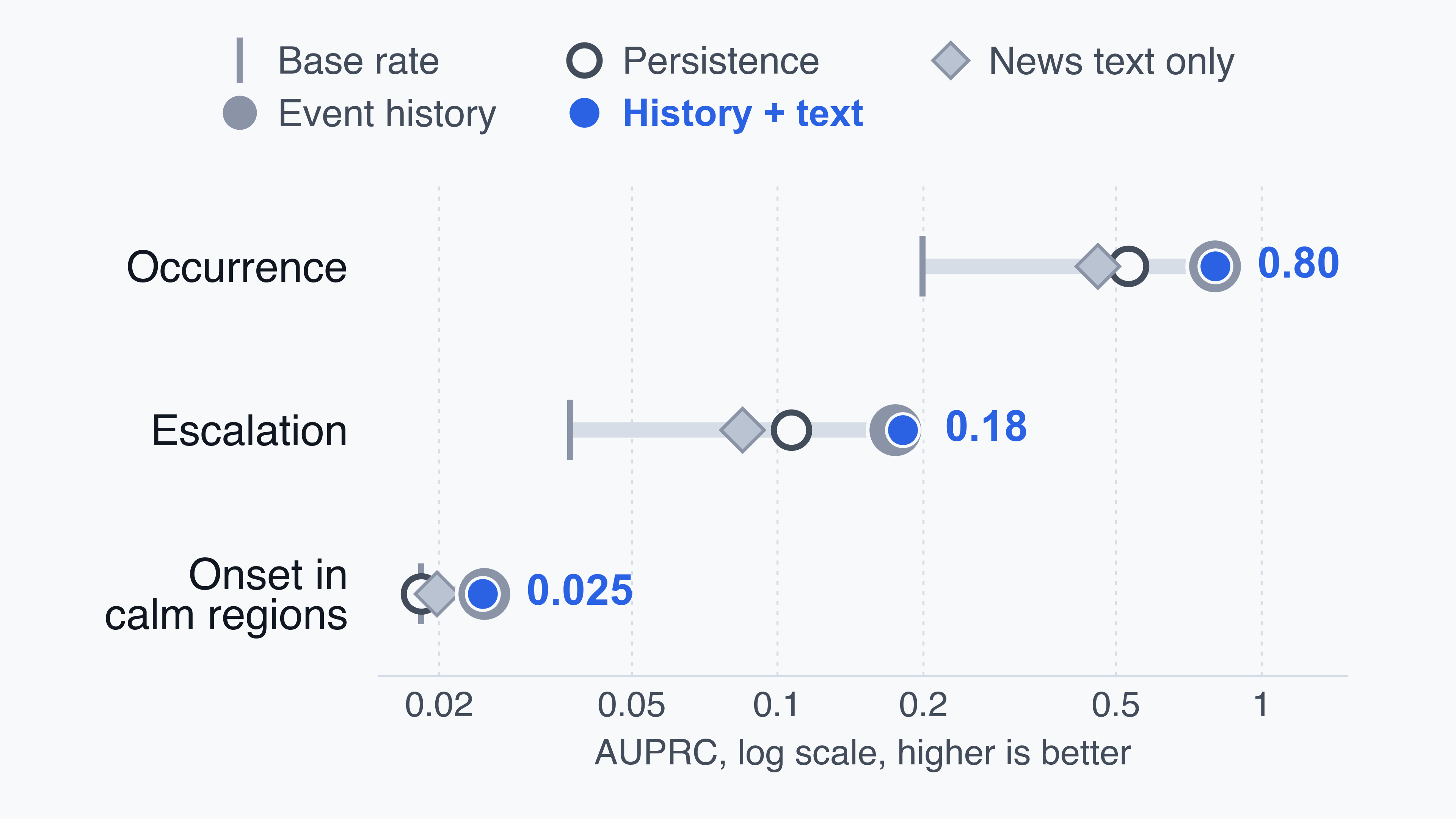
SUB-Forecast is a frozen benchmark for forecasting unrest and violence below the national level: 994 admin-1 regions across 55 countries, monthly, on UCDP ground truth, with news signals built from 336 million GDELT events. Next-month occurrence is very learnable (0.80 AUPRC against 0.53 for persistence). Onset, in regions calm for two years, stays near its base rate for every signal tested.
The story Once you know a region’s event history, does news text add anything? I scored every model strictly out of time and counted an effect only when a tree ensemble and a regularized linear model agreed on its sign. Text passes, barely: +0.3 to +0.6 AUPRC points on forecasting spikes. More in Informative but subsumed.
GeoSocialX
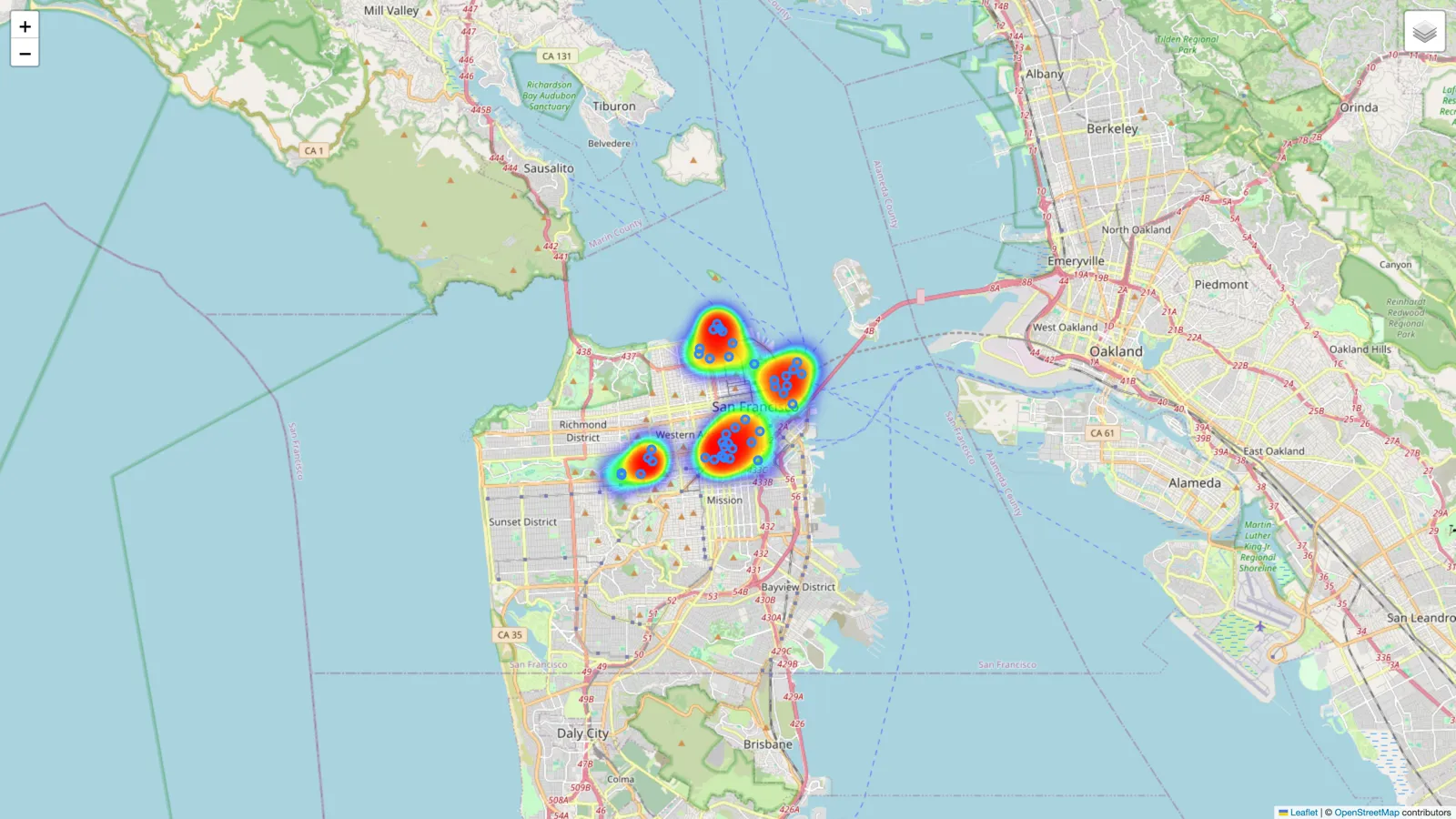
A Python package (on PyPI as geosocialx) that maps the geography of geotagged social and location data from any source (CSV, GeoJSON, Bluesky, or an X dump), reporting coverage before it maps anything, then hotspots and time trends.
The story I started this in 2023 as a tool that fetched geotagged tweets within a radius. Twitter’s legacy API has since been retired and search on its replacement needs a paid tier, so I decoupled the analysis from X and let it run on data people already have. Building it also showed me how much a map hides.
caseload
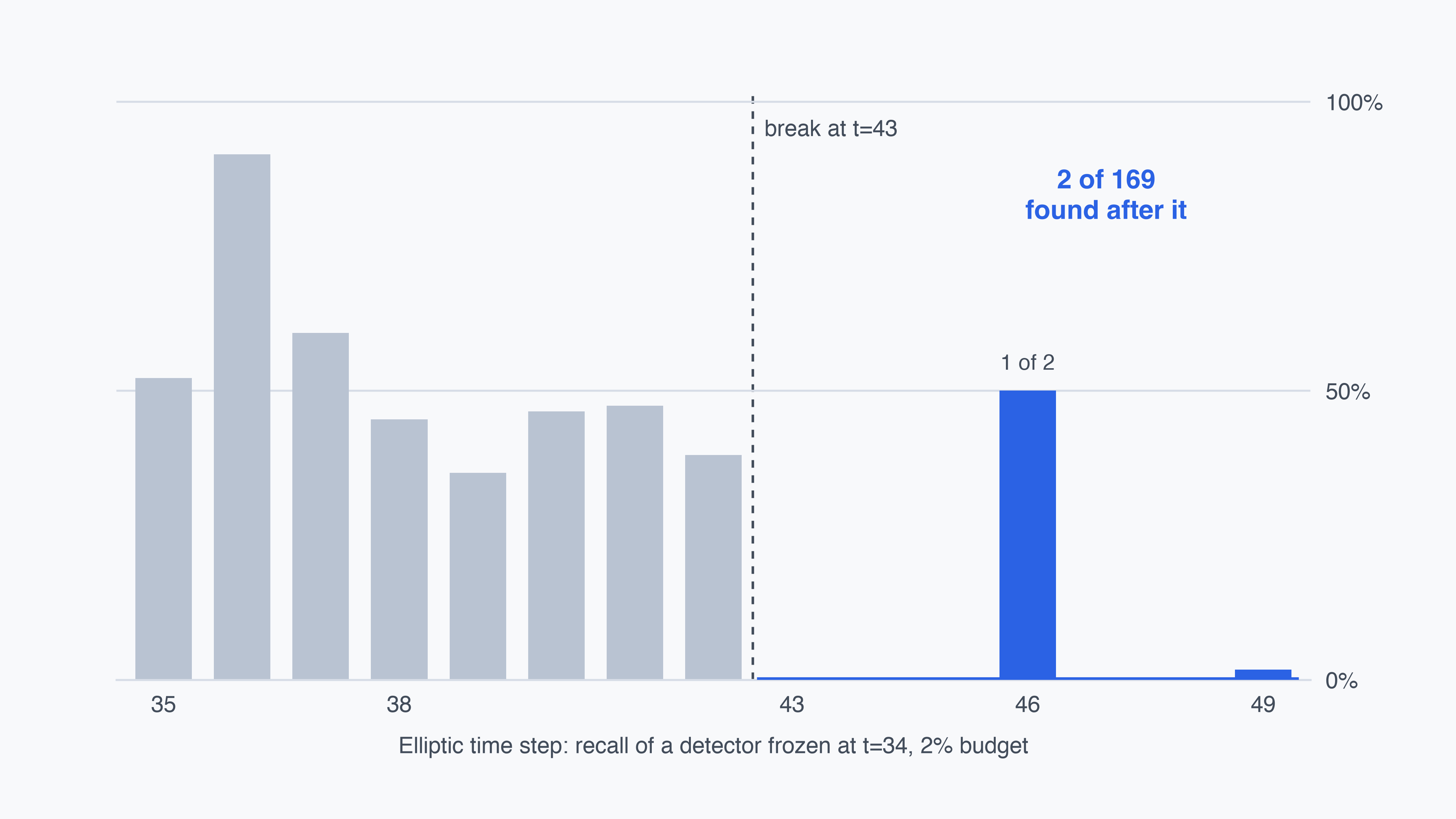
Reinforcement learning environments for budgeted fraud investigation, where investigating a case is the only way to learn its label. On the Elliptic transaction graph, a detector frozen before the step-43 regime break finds 2 of 169 illicit transactions after it. On Feedzai’s synthetic FiFAR alerts, sending 10% of them to analysts cuts expected cost by 3.2% at the dataset’s stated cost ratio. The chart is the per-step recall around the break.
The story A small PPO policy trained on my own drift simulator beat every baseline there on overall recall, including a hand-written rule. Zero-shot on Elliptic’s real regime break, that advantage did not show up. What got tested was my simulator, not the agent, and I wrote that up in The simulator was the experiment.
L5 Motion Prediction Study
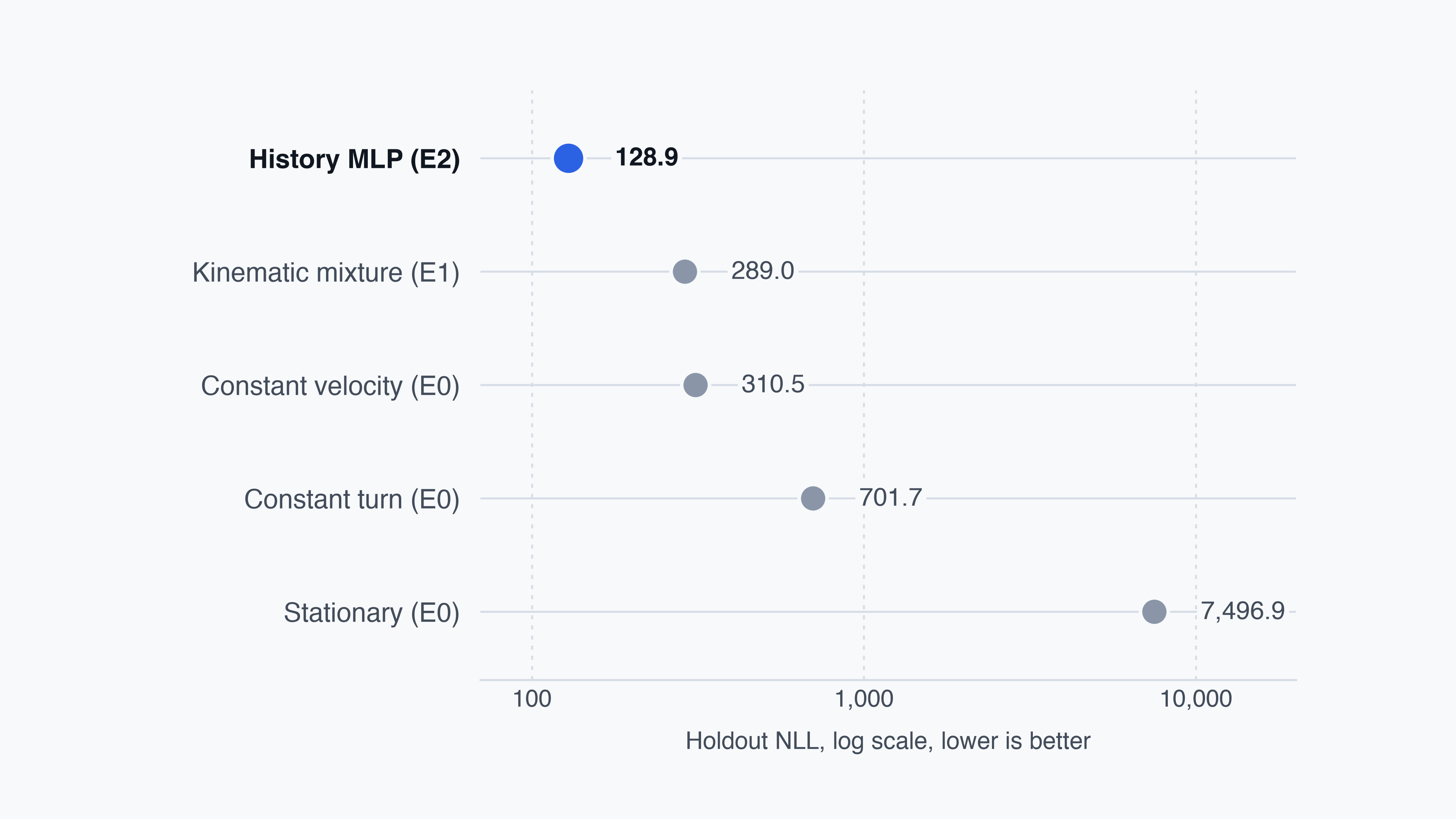
Motion prediction on the Lyft Level 5 dataset, run as a study of what the task looks like on a single laptop’s compute budget rather than a leaderboard run. In progress: the kinematic baselines and a history-only MLP are done, raster and vector models are next. The chart is the holdout results so far.
The story I set the study up as a ladder starting from plain physics, so each learned model has a floor to beat. An early result: fitting a turn rate from 0.4 seconds of noisy history did worse than assuming constant velocity. A mixture of kinematic modes beat its best single mode on likelihood, from mode diversity alone.